Bu Blogda Ara

21 Mayıs 2007

Vietnam'dan Mektuplar 70

21 Mayıs 2007 – HÇMK, Ev

Dün öğleden sonra Tennessa Williams’ın “Summer and Smoke” adlı tiyatro oyununa gittim. Yıllar sonra bir tiyatro oyununa izleyici olarak gidecek olmam bende yeteri kadar heyecan uyandırmıştı. Hele bir de oyuncuların amatör olmaları, bu işi sırf zevk için yapıyor olmaları heyecanımı daha da kamçılıyordu. Çünkü ben de bir zamanlar, üniversitede okuduğum son yılda, Ebru adında bir arkadaşın arkasına takılıp, Beyoğlu’da sadece Bertolt Brecht’in eserlerini yorumlayan Tiyatro Mango’ya takılmıştım. Hiçbir zaman aşk derecesinde tiyatrocu olmak istemedim ama genç oyuncuların tiyatroya olan bağlılıkları, her şeylerini bırakıp, kollektif bir anlayışla kirasını ödeyip, çayları demledikleri o eski binada bir araya gelerek, oyun sergilemeleri beni çok etkilemişti. Onlar gibi idealist, onlar gibi dertli olmayı çok istedim ama biten okul, beni bekleyen uzaklar tiyatroya izleyici olarak bile uzun bir ara vermeme neden oldu. Öyle ki son yedi yıl içerisinde Ebru’yu bile bir kere gördüm. Oysa onun, güney kampüsteki revirin duvarına kafa üstü dikilip, şarkı söylediği zamanları unutmam imkansız. Rolüne hazırlanmak için her türlü deliliği yapıyordu. Hoplayı zıplıyordu çimlerin üzerinde. “Kafkas Tebeşir Dairesi” ne mi hazırlanıyordu. Oysa bildiğim kadarıyla tiyatronun yönetmeni, Halit Abi, ona rol vermemişti. O da benim gibi izleyici olmuştu. Eşittik işte! Her şeye rağmen eşittik...

Tiyatroya takılan, benim gibi Matematik eğitimi alan bir arkadaş vardı. Tiyatro aşkından derslerini salladığı için okuldan ümidini kesmişti. Bir rüyanın peşinden gitmeye hazır, gemileri yakacak kadar kararlıydı. Halit abi ona “tiyatro okula girdiğin anda başlar” demişti. O da binaya girer girmez matematiği unutur, oyuncu olurdu. Halit abi de dışarıda ekmek arası sosis satan bir emekçiydi. İki çocuğu, karısı vardı. Hafta sonlarını gençleri tiyatroya ısındırmakla harcıyordu. Deli gibi de okuyordu. “Don Kişot”un bir yatak odası başyapıtı olabileceğini ondan öğrenmiştim. Hem sonra yeldeğirmenlerinin kapitalizm canavarını temsil ettiğini, Sanço Pançez’i akıl, Don Kişotun duygu olduğunu... O da heyecanlıydı, azimliydi. Ne yaptığını biliyordu ve bildiği gibi davranıyordu. O okulda bildiği gibi davranmayan tek kişi vardı...

Neden ben de o Matematikçi arkadaş gibi olamadım? Çünkü beni bekleyen uzaklar vardı. Ne kadar o uzaklara inanamasam da gidilecek yerler benim geleceğime inanmışlardı. Ellerim, ayaklarım zincirli, çekip götürüleceğim uzaklara düşkündüm yalnızca. Bunu Ebru da biliyordu ama sesini çıkarmıyordu. Çünkü sesini çıkarsa beni gerçek anlamda tanımaktan korkuyordu. Sallanan bir diş gibi ağzın içinde varlığı ve yokluğu bir olan bir parazittim ben kentin yüreğinde. Ya bir sallantı, arafda olmaktan memnunmuş rolü oynayan bir aktör olacaktım ya da uzakları seçip yalnızlığıma çekilecektim. Ben ikincisini seçtim. Çünkü ikincisi kolay olandı. Kendinden kaçmanın sonu yoktu ve kaçabildiğin sürece rahattın. Oysa bu rahatlık içinde bir rahatsızlık vardı. İşte bu rahatsızlık beni yazmaya ve kendimi keşfetmeye yöneltti. İki kimliklilik ya da kimliksizlik... Aradaki farkı halen bilmiyorum.

Dün öğleden sonra evden çıktım. Çamaşırları balkonda bıraktım çünkü hava açıktı. Oysa kentin merkezine vardığımda kara bulutların beni takip ettiklerini fark etmem uzun sürmedi. Dong Koi’daki Bombay Lokantasına gidip önce karnımı doyurdum. Yolda Mongkol’un “my best friend” diye tanımladığı Amerikalı arkadaşı Paul ile karşılaştık. Gerçi karşılaştık pek doğru bir ifade sayılmaz. Ben köşeyi dönerken o beni oturduğu yerden görmüş. Hemen kafenin dışına fırlamış. Ayak üstü birkaç kelime edip yoluma devam ettim. Yemekten sonra yine yol üzerindeki eski kitapçıya gidip, son bir hafta içinde gelen kitaplara baktım. Murakami’nin “Kafka on the Shore” adlı romanını 50 bin Dong verip –böylesine güzel bir romanı daha ucuza almak ayıp olur diye pazarlık bile yapmadım- satın aldım. Hızlı adımlarla motorumu park ettiğim yere yürüyordum ki az önce beni yakaladığı noktanın birkaç metre ilerisinde Paul ile tekrar karşılaştım. O da motorunun park bekçileri tarafından getirilmesini bekliyormuş. Yine üçbeş kelime edip, koşarak motoruma ulaştım. Bundan sonra yapılacak iş tiyato binasını bulmaktı.

Sandığımdan da kolay oldu bulmak tiyatroyu. Yol kenarındaki bir parti görevlisine sormam yetti. Her sokağa en az bir tane düşen bu parti merkezlerinin etrafta olan biten her şeyden haberdar olduklarını yine Vietnamlı arkadaşlarımdan öğrenmiştim. Onlardan habersiz bir genç evine kız bile getiremezmiş. Anlamadığım parti görevlilerinin etrafta olup bitenleri bilmekten başka bir iş yapıp yapmadıkları. Ne zaman görsem, kapının ağzında oturup, buzlu kahve içen asker kıyafetli bir güruh...

Ben tiyatro salonundan içeri girdiğimde benden önce gelmiş tek bir izleyicinin ön koltuklardan birinde oturduğunu fark ettim. Salon saat beşte dolmadığı için 5:25’e kadar bekledik. Zaten ufak olan salonda klima çalışmadığı için dev bir fırıldak girişin sol tarafına konmuştu. Ama ne kadar büyük olursa olsun fırıldağın gücü salonu serinletmeye yetmiyordu. Ben sahneye yakın bir koltuğa oturdum ve çantamdan Murakami’nin kitabını çıkarıp, ilk sayfasına adımı yazdım. Nedense bu işten tuhaf bir zevk alıyorum. Bir kitaba sahip olmanın –fiziksel anlamda kitap fetişizmi mi demeli?- dayanılmaz hafifliği. Bir kaç sayfasını karıştırdım, kokladım. Sabah Naipaul’un “Among the Believers” adlı kitabına başlamış olmamdan dolayı ufak da olsa bir pişmanlık duydum. Öyle olmasaydı şimdi ne güzel Murakami okuyor olacaktım. “The Wind Up Bird Chronicle” ve “Sputnik Sweetheart”ın yazarı beni hem üslubuyla hem de ciddiyetiyle hep şaşırtmıştır. Çaresiz Naipaul’un İran devrimi sonrası Kum’a yaptığı geziye yumulup, okumaya başladım. Bu sırada Fransızca şarkılar dinliyorduk. Bana nedense İkinci Dünya Savaşını hatırlatan bu eski Fransızca şarkılarda hüzne ve doğup büyüdüğüm kent olan İstanbul’a ait bir şeyler bulurum hep. Arada bir bağ olmadığı açık. Kadın şarkıcının ne dediğini bile anlamıyorum ama şarkının müziği ve arada sırada sese karışan plak cızırtısı Beyoğlu’ndan aşağı yalpalayarak yürüyen sarhoş bir kadın imgesini yaratıyordu zihnimde. Oysa Beyoğlu’ndan aşağı yürüyen sarhoş bir kadın hiç görmedim hayatımda.

Derken oyun başladı. Oyuncular Vietnamca konuşuyorlardı. Oyunun Vietnam toplumuna uyarlanmış İngilizce metni sahnenin üzerine asılmış beyaz bir ekrana yansıtılıyordu. Ama ekran küçük geldiği için çoğu zaman yazıların son satırlarını, ta sahnenin arkasındaki duvarda görebiliyordum. Projectörden yansıyan yazılar arka duvara varana kadar çözünürlüklerini yitirdikleri için de okunmaz duruma geliyorlardı. Bazen öyle oluyordu ki cümlede geçen “i” ve “j” harflerinin sadece noktalarını ekranda görebiliyordum. Yazının kalanı sahnenin arkasına vuruyordu. Bir başka zorluk ise ekranın çok yukarda olmasıydı. İnsanın boynunu rahatsız edecek derecede hareket gerekiyordu sahneyi ve yazıları aynı anda takip etmek için. Dikey oynanan bir ping pong maçı gibiydi açıkçası. Bütün bu zorluklara rağmen oyundan kısa sürede zevk almaya başladım. Boynumu sıklıkla aşağı yukarı oynatma sorununu ise şu şekilde çözdüm: Yazılar ekrana yansıyınca hepsini bir defada okuyor, ardından da sahneye bakıp, kimin hangisini diyeceğini basit bir tahminle çıkarsayıp, sahnedeki ayrıntılara bakıyordum.

Oyun güzeldi. Williams’ın orjinal sözleri incelikle Vietnam kültürüne uyarlanmıştı. Fakat sinemalarda olduğu gibi burada da Vietnam’lı gençlerin patavatsızlıkları –cehaletleri mi demeliyim?- sinirlerimi germeye yetti. Önce arkamda oturan kızın çekirdek çıtlatma sesleri geldi. Her iki saniyede bir kulağımın dibinde bir çatırtı. Sonra yanımda oturan çocuk elindeki kamerayla her beş saniyede bir fotoğraf çekmeye başladı. Ön çaprazımda oturan kız ise cep telefonuyla mesaj alıp vermekle meşguldü. Sonradan öğrendiğime göre bu kız, yanındaki uzun boylu diğeriyle birlikte sahnede önemli rollerden birisini oynayan arkadaşlarını görmeye gelmiş. Bu durumda arkadaşları sahnede olmadığı zamanlarda telefonla oynayıp durmaları hoşgörülebilir tabii... Burası Vietnam... Ayrıca insanların cep telefonları hiç susmadı. Neden sussun ki? Altı üstü bir oyun! Oyuncuya saygı duymaya gerek var mı? Bunca emeğe, bunca harcanan paraya ve zamana, bunca ayrıntıya!!!

Beni asıl rahatsız eden şey ise oyunun ortalarına doğru salona giren yaşlı adam, karısı ve torunu –herhalde torunuydu- oldu. Çocuk salona girdiğinden oyunun sonuna kadar oturduğu sandalyeyle oynadı, sağı solu gıcırdattı, oraya buraya yumruk attı. Durumdan rahatsız olan tek kişi ben değildim ama yaşlı adamın torununun yaptıklarından en ufak bir endişe duymadığı aşikârdı. Aynı yaşlı adam oyun bitip, oyunun yönetmeni ve oyuncularla yapılan soru-cevap bölümüne geçtiğimizde, aslan kesilip Vietnam kültürünün mutlak koruyucusu gibi konuşmaya başladı. Adamcağızı rahatsız eden ne oyunda geçen felsefi konuşmalardı ne de ruhun varlığını reddeden doktor. Kafasını taktığı tek bir şey vardı. Oyuncuların adları Vietnam’caydı. Yani olaylar Saigon’da geçiyordu. Bu durumda nasıl olurda bir Vietnamlı kız evli olmadığı bir erkek tarafından öpülebilirdi. Ben gülmemek için kendimi zor tuttum çünkü adamın önerdiği çözüm evlere şenlikti: İsimler İngilizce kalsaymış daha iyi olurmuş. Böylece öpüşen çiftlerin Vietnamlı olduklarını düşünmemiz gerekmezmiş. Düşünsek ne olur? Sanki Vietnamlı gençlerin dudağı yok öpmek için! Sanki parklara, bahçelere doluşan, yüzlerce, hatta binlerce “motorsiklet otellerde” –tabir bana ait- öpüşen, koklaşan, kucak kucağa oturan Vietnamlı gençlerin hepsinin adları Jessica ve Robert. Oyunun yönetmeni bu yoruma yanıt vermedi. İyi de yaptı. Ciddiye alınacak bir eleştiri değildi çünkü. Tiyatroya Saigon’da yaşayan, David ile Rebecca’nın akıl almaz aşk maceralarını izlemeye gelmedik biz. O da benim gibi gülüp geçiştirdi. Dinazorca bir çıkış olarak düşünmüştür herhalde yaşlı adamın söylediklerini... Başka ne olabilir.

Oyun bittiğinde, tüm bu olumsuz etkilere rağmen ben mutluydum. Oyuncuların gözlerindeki pırıltı görmeye değerdi. Hepsi yapmış oldukları işin hakkını vermişti. Hele başrolde oynayan kıza hayran olmamak elde değildi. Kız ailesinin zoruyla “Ticaret” okumuş ama içindeki tiyatro aşkı yüzünden başka bir üniversitenin “oyunculuk” bölümüne de kaydolmuş. Neden böyle yaptığını sorduklarında, “ailem ancak ticaret bölümünü bitirmem şartıyla, tiyatroculuğa devam etmeme izin verdi” dedi. İşte o anda aklıma yedi yıl önce Tiyatro Mango’da gördüğüm o Matematik bölümü öğrencisi geldi. Alkışladığım, alkışlayacağım bu oyuncunun rolünü güzel oynamış olması değildi sadece. Bu azmin, inancın ve hatta inadın zaferiydi. İnsan ancak aşık olursa böyle bir zaferi elde edebilirdi ve aşk ilerleyen yaşıma rağmen, kendisine şapka çıkartılacak önemli insani meziyetlerden birisidir benim için.

Her şey bittikten sonra, gidip bizzat oyunun yönetmenini tebrik ettim. Maalesef oyuncularla konuşma fırsatım olmadı çünkü İngilizce konuşmuyorlardı. Ben de Vietnamca’yı hâlen iki aylık bir bebeğinkinden daha yetkin bilmediğim için denemedim bile. Yönetmen oyunun ilerki seanslarına arkadaşlarımı getirmemi rica etti. Ben de söz verdim okuldaki arkadaşlara konuyu açacağımdan. Gerçi hemen herkesin oyundan haberi var ama sanırım kimsenin sanata ayıracak vakti yok. Belki benim tahşidatımla, gaza gelip birkaç kişi gider. Bugün denedim, Gavin gitmek istiyor. Belki haftaya Pazar birlikte gideriz.

Oyundan sonra koşarak merdivenleri indim. Motora atladım ve evin yolun ututtum. Ho Çi Minh Kentinin beni aptala çeviren bir özelliği hemen tüm yolların birbirine benzemesi. Bir yere giderken şans eseri kaybolmasam bile aynı yoldan geri dönerken kaybolabiliyorum. Biz tiyatrodayken yağmur deli gibi yağmıştı anlaşılan. Yol kenarlarındaki minik göllerden, tekerleklerin yarıçapı yüksekliğine gelen su birikintilerinden geçip, birkaç defa yanlış dairelerin –bir de bu Fransız usulü yuvarlaklar var- etrafında dönüp, yanlış sokaklara savrulduktan –merkazkaça uğrayan topaç gibi- sonra yolumu buldum. Eve vardığımda hemen balkona koştum. Gömlekler ve pantolonlar duvarın arkasında kaldığı için ıslanmamışlardı ama kenara yakın koyduğum iç çamşırları ve çoraplar çamaşır makinesinden çıktıkları durumdan iki kat daha ıslaklardı. Onları bir güzel elimle sıktım, odanın içine astım. Gelirken yolda aldığım mama’nın üzerine sıcak su döküp yedim. Ter içinde acılı mamayı yerken aklım yine yarım saat önce sahnede seyircilere pırıldayan gözlerle bakan oyunculara takıldı. “Ya” dedim kendi kendime, “ya ben de yedi yıl önce uzakları değil de gerçekle yüzleşmek anlamına gelen İstanbul’u seçseydim, bugün alkışlanılan, gözlerindeki pırıltıyla seyirciyi selamlayan bu oyuncular gibi olabilir miydim?”


20 Mayıs 2007

Vietnam'da Mektuplar 69

20 Mayıs 2007 – 13:21 – Ev, HÇMK

Ara verdikten sonra tekrar yazmaya başlamak kadar zor bir şey yok sanırım. Bilgisayarın başına her ne kadar büyük bir şevkle oturmuş olsam da başlamak hep o aynı zorluğu barındırıyor. Bugüne kadar yazmış olduğum yüzlerce sayfanın, öykülerin, denemelerin, kitap eleştirilerinin bile çok faydası yok. Aşırı yük bindirilmiş bir uçak gibiyim. Kalkışa geçmek her zaman için uçmaktan daha fazla enerji gerektiriyor. Uçağın daha önce yüzbinlerce kilometre kat etmiş olması bu gerçeği değiştirmiyor. İşte burnumu havaya kaldırdım, ön tekerleklerim yer ile bağlantısını kopardı, büyük bir gürültü ile sallanıyorum. İçimdeki karanlık ses “Dön geri, kitap oku ya da televizyon izle” diyor. Dinlemiyorum! Uçmak, kaybolmak, kısa bir süreliğine de olsa yerden uzaklaşmak istiyorum. İşte arka tekerlekler de kopardılar kendilerine vurulan çekim zincirini. Artık güvendeyim, tereddütten dolayı sasılmıyorum. Gideceğim yön belli, geri dönüşüm olamnaksız. Tüm enerjimi yükselmeye verip, bir an önce bulutların üzerine varmalıyım. Çünkü ancak bulutlar teselli edebilir tembellikten yorulmuş bir yüreği...

Bundan sonra güncemi Türkçe tutacağım. Vietnam’a geldikten sonra İngilizce yazmak gibi cesaret isteyen bir işe giriştim. Fena da olmadı! Yetmişe yakın günce sayfası yazdım. Bunların bir kısmını ben bile beğendim. Pek çoğu ise bir daha dönüp bakılmamak üzere internet denen dev evrenin karanlık dehlizlerinde var olmaya –ne demekse var olmak?- devam edecekler. Bazen kendime dönüp “Ne de olsa İngilizce yazıyorum. Bok kadar değeri olmayan şeyler yazsam bile kaçıp sığınabileceğim bir bahanem var” kolaycılığıyla saçmaladım. Ne de olsa kendi dilimde yazmıyordum. Yanlış yazsam, dilbilgisi kurallarının canını okusam kim ne diyecekti? Pek az insanın bildiği bir ülkede yaşıyor olmam da yazdıklarıma destek oldu. Zırvaladım, bilinen şeylere gereksiz yere parmak bastım, anlamadığım insanların anlamadığım kültürleri üzerine hükümler verdim, onları yargıladım ve hatta çoğunda sonucu bile beklemeden onları ayıpladım.

Bugün takvime baktığımda bu ülkeye ayak bastığımdan beri on bir ay on gün geçmiş olduğunu fark ettim. Bu süre içerisinde sadece beş öykü yazabildim. Eğer şu anda üzerinde çalıştığım öyküyü önümüzdeki yirmi gün içerisinde bitirebilirsem bir yılda altı öykü yazmış olacağım. İçler acısı bir durum! Hepsini toplasam 30 bin kelime ya eder ya etmez. Oysa arkadaş çevresi geniş olmayan, eğlence seçenekleri güdük kalmış bir insan eğer yazmayı seviyorum diyorsa daha üretken olmalı. Bu yönümle de kendimi tembel görüyorum. Bir işe yöneldiğimde nedense ufak tefek şeylerle dikkatim dağılabiliyor. 300-400 sayfalık romanı bir haftada ancak bitirebiliyorum. Eğer okuduğum kitap felsefe ya da toplumbilimi üzerine ise bu süre iki haftaya çıkıyor. Oysa daha hızlı olmalıyım. Ömür kısa, yapılacak işler çok... Önümde iki seçenek var: Kendime karşı yumuşak olup, ben böyleyim diyerek, işleri oluruna bırakmak. Ya da ciddi disipline sarılıp, kendi oluşturduğum kurallar cehenneminde yaşamaya alışmak. Birincisi kolay görünse de aslında kişiliğimi değiştirmem zor olduğu için uzun vadede daha sorunlu. Çünkü ben uzun süre yazıya ara verince kendime karşı düşman kesiliyorum. Saldırganlaşıyorum! Akıllı kararlar veremiyorum! Bir girdaba yakalanmış gibi sürekli dibe doğru çekilirken, bir yandan da karşı koyma kabiliyetimi kaybediyorum. Karşılıksız, kısır döngüden oluşan günler birbirini yok sayıp, beni arada bırakıyorlar. Serseri mayın gibi geziniyorum ortalıkta. Bu durumdan zarar gören sadece ben değilim. Durumun ciddiyetini anlayamayan eşim de acı çekiyor benimle birlikte. Onun ıstırabının kaynağı bana olan sevgisi. Benim ıstırabımın kaynağı ise bir türlü uçağımın burnunu kaldırıp, yerçekimine meydan okuyacak güce erişememesi. Ya da bunda çok ama öok zorlanmam. Kısır’ı yazdıktan sonra neredeyse iki ay geçti. O zamandan beri hiçbir şeye dokunamadım. Bir iki yazma denemem oldu ama hepsi heyecan eksikliğinden ya da malzeme yetersizliğinden yarıda kaldılar.

Ama artık dönüyorum. Uzun süre düşündüm ve kararımı verdim. Bir yıl sonra, Haziran ayında istifamı verip Türkiye’ye döneceğim. Doğup büyüdüğüm topraklara, sekiz yıl arada sonra geri dönmek beni hem mutlu ediyor hem de tedirgin. Mutlu olacağımı düşünüyorum çünkü insanlarla rahatlıkla iletişim kurabileceğim, dostlarım olacak, ailem bana destek olacak. Tedirgin oluyorum çünkü beklentilerimden çok farklı şeyler bulmaktan korkuyorum. Sekiz yıl azımsanacak bir süre değil insan hayatında. Çok şeyin değişmiş olduğunun farkındayım. Ama bu değişmişliklere alışabilecek miyim? Ya da ülkemdeki insanlar benim alışma çabalarıma müsahama gösterebilecekler mi? Bir de varır varmaz askerlikle bocalayacağım. Belki de saunadan çıkıp, doğrudan buzlu suya atlamak en iyisi! Kısa ve öz!

Beni tedirgin eden bir başka nokta ise kimilerine göre bencilce sayılabilecek kişisel bir tutum. Burada, Tayland’da ya da Vietnam’da farklı birisiyim ben. Uzaklardan gelmiş, buraların insanına benzemeyen bir yabancıyım. Rahatlıkla parmakla gösterilen, çoğu zaman ilgiyle karşılanılan, kendisine gülümsenen birisiyim. Sekiz yıl içerisinde sokaklarda bir yabancı gibi muamele görmeye alıştım, hatta bundan tadımsızbir zevk almaya başladım. Öyle ki yabancı olmak beni mutlu ediyor çünkü ancak bu şekilde gündelik hayatın kargaşasına bulaşmadan kendi dünyamı yaşayabiliyorum. Oysa ülkemde sıradan birisi olacağım. Milyonlarca gençten birisi. Sıradan olmak beni korkutuyor. Buna hakkım olmadığını bilsem bile içimde kaybedeceğim ayrıcalığın eksikliğini hissetmeme engel olamıyorum. Hoş artık genç sayılmam ama nedense geri döndüğümde kaldığım yerden başlamama izin verilecekmiş gibi bir his var içimde. Tekrar yirmi üç yaşımda olacağım, tekrar hayata atılmak için çaylak, yazmaya başlamak için amatör olacağım. Belki de daha güzel olacak, belki de bunca yıldır göremediklerimi görüp, yazmadıklarımı yazacağım. Yolda yürürken ilan panolarındaki yazıları okuyabiliyor ve anlayabiliyor olmak bana ayrı bir zenginlik getirecek. Dilencilerin şarkılarına eşlik edebilmek, futbol maçlarını kendi dilimde izleyecek olmak, dostlarla biraraya gelip çay içerken siyaset ya da edebiyat konuşmak, annem ile çarşıya çıkıp beyaz peynir almak, eşime Türkçe öğretmek, sabahları poğaça ve börek yemek, kütüphanelerde vakit öldürmek, Üsküdar sahilinde yürümek... Bütün bunlar güzel tarafı geri dönüşün... Peki ya işler yolunda gitmezse... Bu durumda benim dönüşüm gerçekleştikten kısa bir süre sonra yerini pişmanlığa bırakacak. Çitin öteki tarafındaki otları hep daha yeşil bulan inekler gibi ben de hep bana uzak olanı arzulayacağım. Burada mutsuz olduğum gibi orada da mutsuz olup, artık sorunun otlarda değil de ineklerde olduğunu çaresizce anlayacağım.

Yapacak bir şey yok... Bekleyelim ve görelim...

23 Şubat 2007

Letters from Vietnam 68

22 February 2007 – 18:33

Here I am again! I want to finish these blog entries as soon as possible so that I can resume to short stories I have started to write before Tet. There are three short stories waiting to be written. One of them came to my mind at the top of the mountain. When we arrived at the top, I asked myself the question “Is this all?” I was tired, breathing frequently and the sun was burning my skin as if I am a thin cigarette paper waiting to take flame. Everybody was looking down at the villages and the small fires in the forest. But my mind was somewhere else! I looked up and thought as if I wanted to go up more. I knew that this was impossible and I knew that I am trying to block myself with this obscure thought. In fact, what amazed me is this impossibility. There was no way to go upward anymore. That was the end of our challenge and the next is going all the way to announce everyone that we did it. I was bewildered with the fact that a three hours climb can make us satisfied with what we have done. If we did not do anything else but sit there for long time, it would not make any difference. Because the action of going up was the thing we were looking for, not staying at the peak of the mountain. Then I looked at the father and son again. Their happiness was far more than mine. The son was proud of his father and father was happy with the result of his hard-work. Instead of sending his son to a game café, he carried his son on his back to show him the beauty of his village. At that moment I have imagined this boy becomes a guide 10 years later and he brings tourists to this peak everyday. He remembers his father all the time he climbs the uphill and one day he tells his story to one tourist. I did not really figure out where the story will go but it can be a good beginning for a story which had back and fro movements inside.

* * *

I am a dump when it comes to finding a place without a map. Even I have the map in my hand I can not figure out where the north is and where I am exactly in the map. If J does not help me out probably I would never be able to get to the house of the Poet. We walked beside the lake and after 500 meter we turned left. First we went to a wrong street because I was over-confident with the map in my hands. I was like a prophet who knows everything about everything. Then J said we were on the wrong way. We turned back and this time without hesitation I followed her. After a while we were there, in front of “Stop N Go Café”.

We entered through an iron gate and saw a little wooden café at the left side. There was nobody inside. Actually it seemed to me like people already left this place long ago and there was no more business. I pushed the door gently to check if it was open. Surprisingly it was! We got in the wooden room and looked around. There were small tables and a few small chairs here and there. A few calligraphic letters and some drawings of the Poet were on the walls. But there was no coffee, no tea, no intellectual discussions, and no young people playing chess while talking about either politics or football. We were both disappointed!

Just we left the café and were walking towards the gate, a motorbike entered into the garden. I stopped her and ask her about the Poet. She smiled and told us that he is at home and the café is closed because of Tet. She also mentioned that the Poet is her uncle. When I asked her that if it was possible to see him and talk to him for a few minutes. She smiled again and said “Of course! He is always welcome to visitors”. We walked to the big house 10 meter from the entrance of the garden. We took off our shoes and entered into the house where he was playing chess with a young man.

The walls were full of calligraphic art pieces and there were pieces of poems almost everywhere in the room. When he saw us, he was more than welcome. He stood up as if some important guests came in and shook our hands. When I said I am from Turkey and J, my wife is from Thailand they were quite surprised. Probably we were the only Turkish and Thai people visited him. We sat and he himself poured us some tea. I said “Happy New Year” again with my regretful voice just because I forgot how to say it in Vietnamese again. J said it in Vietnamese. The poet whose name is Duy Viet was a journalist during 70s and after political fluctuations he quitted his job and started to have a silent life. Here, in this house, he was working on his calligraphy works, writing poetry and running a café for young intellectuals of Vietnam. When we entered the room, he stopped playing chess but later I continued for him against the young guy who I leant later was a friend of his son. Later his son and daughter-in-law also came. I asked them if there is any café like this in Ho Chi Minh City. They first tried to tell me a name but then they stopped mentioning the name because I guess it was not like exactly what I wanted or it was not similar to “Stop N Go Café”. Duy Viet looked at me and said “This is the only café for its kind and there is no more like this in Vietnam”. I smiled and nodded to show my faith in his words. Although it was not good news I was happy with the information. I told them that I am working in Ho Chi Minh City and I also write short stories –even started a novel but it goes in the speed of tortoise- when I have time. I also told them that I will translate the poem which already has been translated into 22 languages but not Turkish yet. J bought a calligraphic work from the shop, we drank tea and talked about poetry and writing for a while. I was happy somehow in a house of a poet but still there was something missing. I did not read a single poem of Duy Viet before coming to his house except for the English Translation of “There was universal love left in the world” which was in the booklet. All the walls were covered with calligraphic writings of which I could see some of them were Vietnamese, some were French but most were English. There were paintings and drawings of his portrait as well. We signed a big notebook which has been signed by many other visitors and we added some lines to a long writing which starts with “I would like to meet ….” Different people from different nations wrote lines about their own nations and he asked us to write something about Turkey or Thailand. I remember a few of them… I would like to meet a communist American, I would like to meet an Italian who can talk slowly, I would like to meet a Vietnamese who does not smile… I added one line to the page and same thing J did as well. I don’t know what she wrote and I will not write here what I wrote on that page.

We took a picture –this was the last picture before the camera flashed the red light and went off due to the dead battery- together with Duy Viet. This was also end of the bad luck came with my bad timing in cutting my toe nails.


After finishing our teas and listening to the sound of grumbling stomach of J, we left the house with joy. I really did not know what kind of poetry Mr. Duy Viet wrote but somehow being in a house of a poet was more than enough for me. Especially in a country where people do not really appreciate the work of art as they used to do in the past, it is more crucial for me to see someone who makes his life through his pen and his mind.

After we left, we ate one more time. Then I went to an internet café to search about him with the hope that I can find some translations of his works. Unfortunately all I found were Vietnamese sites. The English sites were mostly like mine, those who visited him and talked with him. Here is a few links I have found:

http://www.danceinsider.com/f2001/f216_1.html

http://www.ballofdirt.com/entries/3554/40263.html

http://www.thingsasian.com/stories-photos/1065

http://www.koanic.com/duy/duyzen.htm

22 Şubat 2007

Letters from Vietnam 67


22 February 2007 - 10:32

Josh is an American firefighter from Arizona. He works for six months during the summer because there can be fire in the forest only in the summers. He saves enough money to travel to South East Asia during these six months and when winter comes he packs for SEA. More or less like a bear! Six months hard-work and six months leisure! He widely travels around Vietnam, Thailand, Laos, and Cambodia etc… It is a life divided by two different worlds. Work and Fun are distinctly separated. He says being a firefighter is a hard job because they have to climb high hills as fast as possible to control the fires and basically there is work almost every day. Firefighters can not stay at home on Sunday morning or can not enjoy a Friday night party if there is a fire in the forest! After this six months long hard work, he moves to SEA and spends his money here. I imagined myself having a life like this, divided by two but somehow could not put myself into the frame. It is almost impossible for me to stop working for six months. What will I do if I don’t work? Write? I realized that I can write best during the stressful times of my life. I do writing as a way to get out of work stress. If there is no work, then there is no stress and then there is no need for writing. It is this simple. Whenever I say myself “I need some free time to write” and take some time off to relax and write, I basically do nothing, spending my all time on stupid things and produce no work at all. The best stories I have written are all planned/plotted and written during very hectic days of my life. I guess this is the only way for me to keep going. Write whenever I have time and work for the rest of my life to earn my bread.

After the breakfast, we went to travel agency’s office to get our bicycles. There was a Vietnamese guide and I also learnt that Josh is coming with us. There was nobody else who signed up for the tour so only four people were going and two of them were guides. I liked the idea of one guide of one person. We started to pedal uphill towards the cinema. J was better than me in riding bicycle. She went up straight without any problem while I was struggling to understand the gears and brakes of the bicycle. After the short uphill, we went down to the lake. It was around 2 km we rode around the lake and started to climb a steep hill. Then J complained! She said it is too hard for her and stopped the bicycle beside the road. Everyone stopped! We only came two kilometers on a flat road and we did not even start climbing high hills. It was just beginning. She said her heart is pumping very fast and this journey was impossible for her. I told her that she can go back if she wants. Vietnamese guide called the agency and told them sent someone to take J and the bike. Her face was pale and eyes were red. I looked at her and told “My peln rai” with a large smile on my face. She tried and she failed. It was ok because I did not expect her to come all the way. As a person who never exercises, does not play any sports, she has right to stop at that point. Josh stayed with J to wait for the motorcycle and told us that he can catch us. I and Vietnamese guide continued riding uphill. It was hard but I managed to do it. Two things made my job easier: When I ride uphill, I did not look at the end of the hill to see how far more to go. I just looked at the front wheel of the bike and a few meters away from the front wheel. To look at the target and to calculate how far more to go is not a good idea. I did not need it either. Looking at the front of the bike and counting prime numbers or perfect squares is easier. The second thing was the reward of going uphill. Whenever we finished an uphill, we started to go down. It was beautiful because the bicycle can go really fast downhill and there were so many beautiful mountain scenes around. Small colorful houses, graveyards, big flower gardens, tea plants and carrot fields etc…


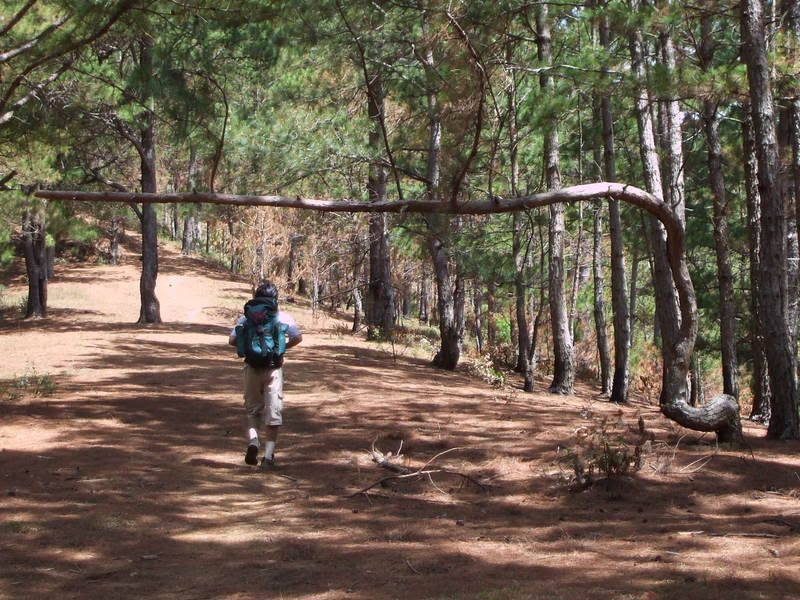
After around 8 km of riding bicycle I was already exhausted. The biggest problem was the seat of the bike. It hurt my balls very hardly that I could not even sit on it properly. I kept standing on the bike every ten seconds to let some air flowing inside my shorts. The seat was not comfortable at all. We arrived at the outskirts of the Lang Bian Mountain after approximately 40 minutes ride. It was a national park and there was no access to the park with bicycles or motorbikes. The only vehicles which have access were the green jeeps and the business was being run by the government. We bought the tickets and started to walk up. I was thinking it can not be so difficult to climb a mountain because I used to do climbing the hills around my village. However, this was my first climbing to a high peak like this and nothing is easy when it comes to physical challenge for me.


We took a small path to go up. Then we entered an area of high trees. Everything was ok until we arrived to the last 500 meters of the climb. It was very steep and there were roots of trees, leaves, branches on the path. Because many people before us climbed the same route, it was easier to decide where to step next and where to hold. However my energy was going down while we were physically going up towards the peak. Both of the guides were going so fast. At one moment I stopped for breathing. It was frequent and loudly. A sound like small working engine was coming out of my chest. I was soaked in sweat and the peak was not near. I continued climbing and stopped more frequently. I saw more and more people climbing on the same path. Some Vietnamese men with the cigarettes in their hands, some young girls with their red or blue hats on their heads were moving up slowly. Their conditions were not better than mine. They even stop all together and have long conversations beside the path, on the trunks of the trees. There were a father and his 10 years old son climbing as well. When the boy was too tired, his father started to carry him on his back. “What a lucky boy” I said to myself, “having a father like this!” They were also tired and we started to go together. Sometimes I leaded them and sometimes they leaded me. Because they were not speaking English, our communication was only possible with the uniqueness of our target. We wanted to get to the peak, as soon as possible.


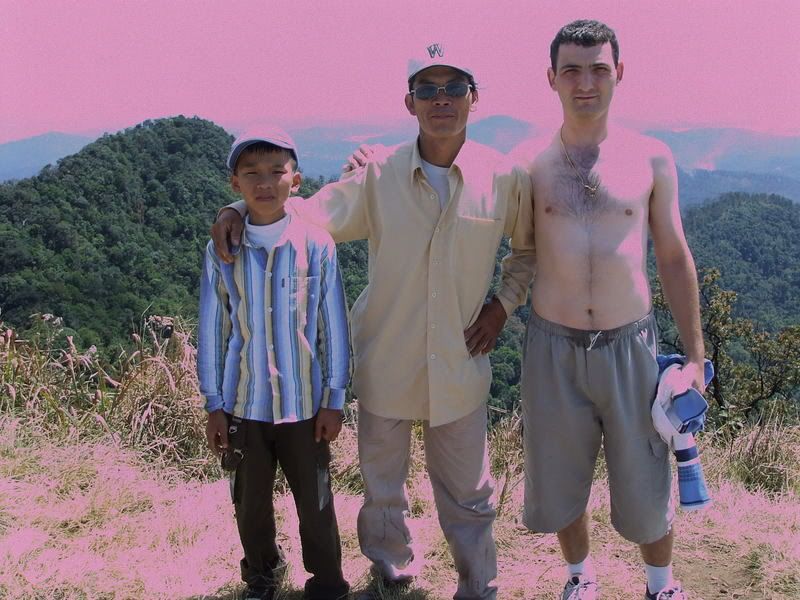
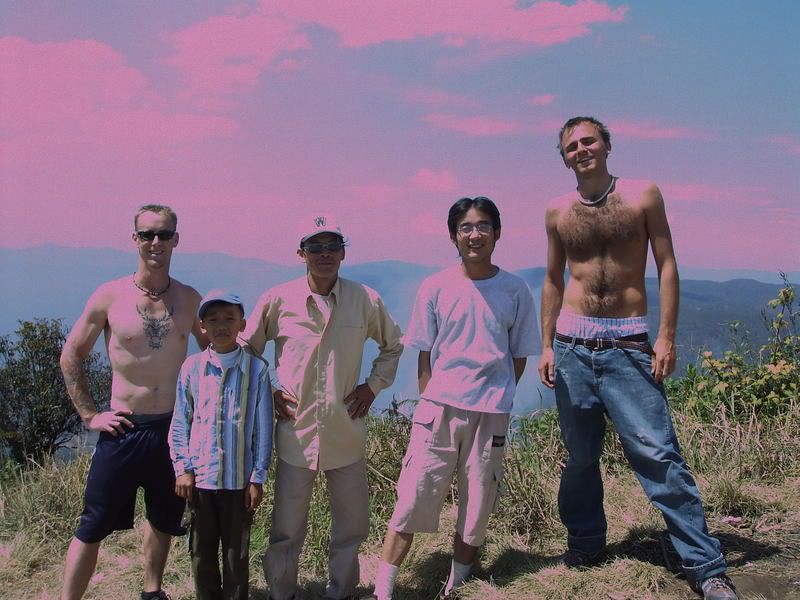
Josh already disappeared because he was too fast for us but the Vietnamese guide was with me until the peak. Probably he was feeling responsible for me. At the end, we arrived at the peak. I took my t-shirt off and took photos of the other peaks, myself, Jose, Vietnamese guide, a tall Italian guy, father and son.


It was an amazing moment for me! We were at a very high point and things seem very small when we look from there. There was a strong breeze coming from all directions. The houses were too small and the people are almost invisible. There were other peaks around and we were looking at a large piece of land as if we have just conquered it. More and more people wee coming up to the peak. When I see them taking their last steps on the hill, it reminded me a rabbit moving his head out of the hole. They were popping up slowly. A few Vietnamese young people made a baraka-style tent for themselves and sat under it to protect them from the sunlight. I did not care much about the sunlight because I already got sun burnt and knew that it is going to hurt in next days. The Vietnamese father and son gave me their address and asked me to send their picture to them when I print them. I said “no problem”. We had lunch at the peak and left the point for going down.

Getting back to the entrance of the park was easier of course but also more dangerous. If you can not control your speed, you can easily skip down on the hill. But still we did not get sweat this time. Moreover the sun was not strong any more. The sky was cloudy and we were among the trees. We started to ride our bicycles again at the end of our walking. There was a long uphill and I could not do it on the bicycle because of the seat. It hurt my balls so badly again and I started to walk with the bicycle. I drove some and walked until I get to the end of the uphill. Later on it was easier. We took a short-cut to get to travel agency’s office. I was exhausted but happy somehow. It was a tiring day but definitely worth to try. I went to hotel room to see what J is doing. I took a hot shower and after having another lunch at the restaurant beside the hotel we went to see the Poet and his café.

21 Şubat 2007

Letters from Vietnam 66

21 February 2006 – 10:34

Getting rid of bad luck by staying away from the road sign can sometimes show itself as a surprise! When we returned to the hotel I found a photocopy magazine beside the reception desk. There was a black-white drawing which depicts a man with beard and mustache. It looked like my little literary magazine, Yaprak, which survived only seven issues in Thailand. However, this looked a unique issue. There was no date on it, no issue number, no name other than Duy Viet. Then it might be misleading to call it a magazine. It can be called a single work of art in different languages, a booklet. At the bottom of the cover, it says “Duy Viet – Dalat – Vietnam”. I opened the cover and my eyes started to flash with my discovery. It was one poem in twenty two different languages. Of course my first reaction was to look for if there is Turkish or Thai. However I could not find either of them. There were English, Vietnamese, Hindi, Dutch, French, Polish, Japanese, Chinese, Spanish, Korean and many more languages I can not recognize. There were also calligraphic writings inside. The style reminded me Chinese calligraphy but this was being done with Latin alphabet. It was hard to read because either I am not used to it or the quality of the photocopy was not good enough to convey the message of the artist. Here is the English version of the only poem in the booklet:

THERE WAS UNIVERSAL LOVE LEFT IN LIFE

In the world
Impartiality opens every heart
The West’s soul is voluntarily
permeating the East’s dream unity
Heart by heart
never wearisome of being together
How wonderful and mysterious
The human life
similarly
The sun light
the flower blossom
Make every effort
for mankind’s happiness
and independence

I am not an expert in poetry and especially if it comes to a poem written in a foreign language my skills to understand the poet’s intention becomes almost zero. I am not sure what language this poem was written originally. It might have been a translation from Vietnamese, French or Chinese. It might sound better in its original language and any judgment on the translation might bring a wrong conclusion.

After looking at the all pages the booklet, I asked Mr. Duc about where and how he got it. He said the writer of the booklet is a famous poet and calligrapher living in Dalat. I asked him if it is possible to meet him. Mr. Duc said, the poet has a café near the lake and he is usually welcome to all visitors. He showed me the place of the café on the map. I decided to go to visit him before getting back to Ho Chi Minh City.

Second day our vacation was very simple. I woke up at 6 am for a morning run. It was a cold and even icy morning. I was not ready for such a cold weather and I felt the coldness at my back while running. I was surprised when I saw the little icy water paddies beside the pavement or the grasses. I did one complete turn around the lake (approximately 5 km) and returned to hotel before getting cold. After taking a hot shower and having a nice breakfast, we rented a motorbike from the hotel and traveled around the city, mountains and other places almost all morning. We went to a place called “Valley of Love”. It was a park and like everywhere it was full of Vietnamese families who came to take photos under the trees, in front of the flowers, on the mini-China Wall and beside the cages of strange animals.

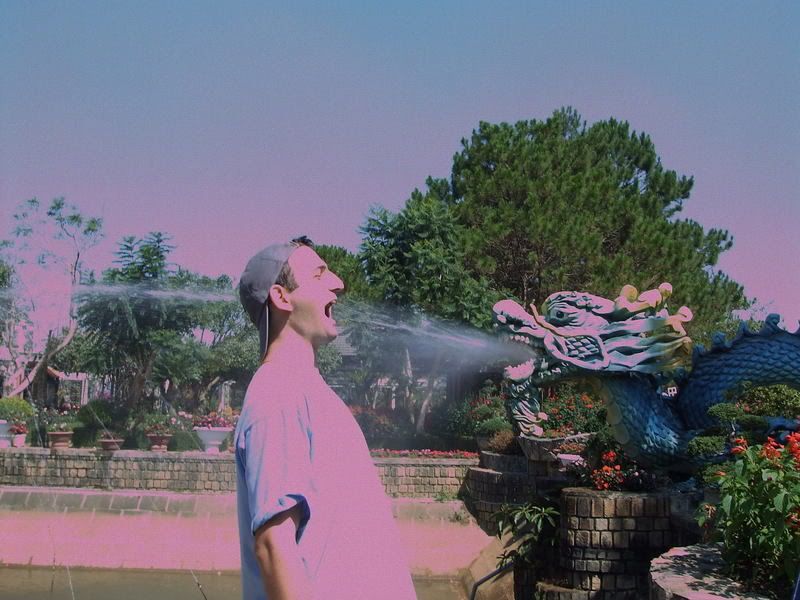
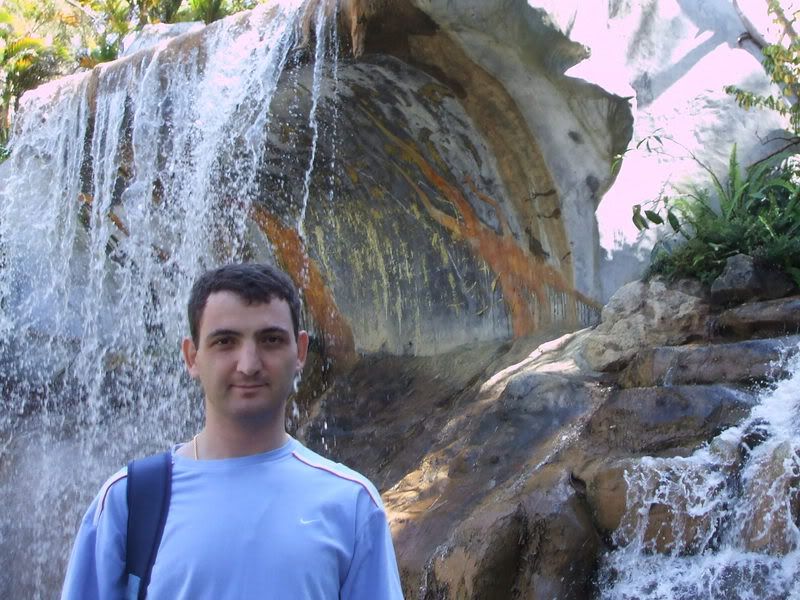
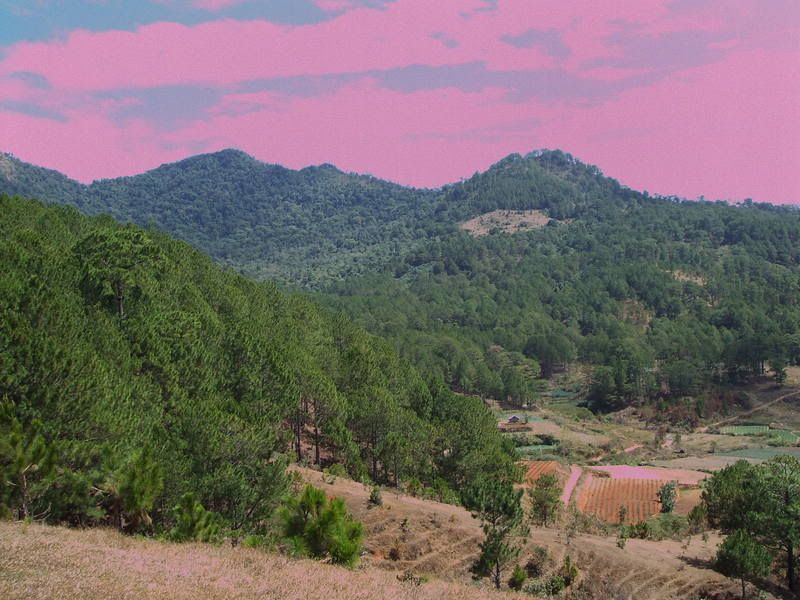
We walked through the park and took photos of each other as usual. There was dragon spreading water to a large pool and a few tea gardens with so many beautiful flowers. There was also a little waterfall for people to get in front of it and take photos. Because it was a high point, the view was beautiful and reminded me my village. There were mountains and Vietnamese people seem to enjoy the nice breeze coming from the high heels. As I have observed, Vietnamese people like romantic scenes and romantic songs. Everywhere I have been, they were playing songs like My Heart Will Go On, Unbreak My Heart or Everything I Do etc…


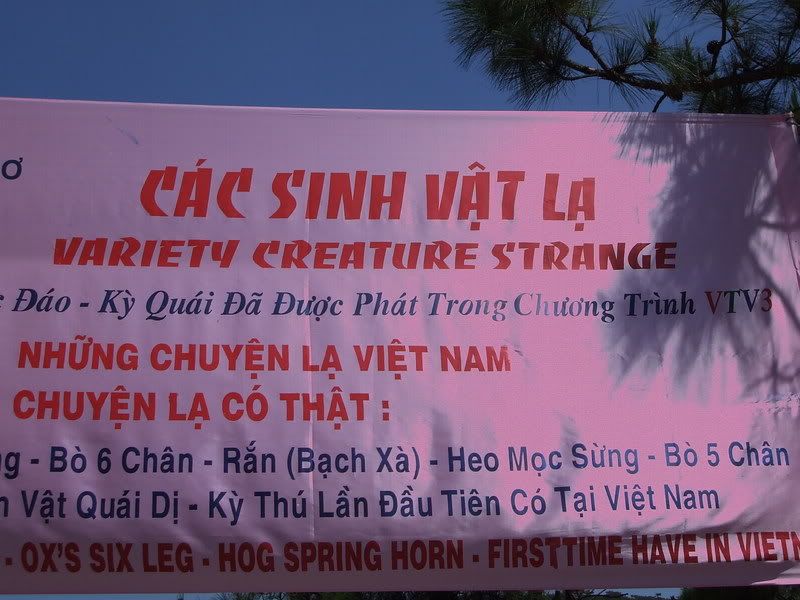
While walking beside the little China Wall, I saw a large banner saying “Variety Creature Strange”. I looked at the sign and tried to understand what it means. I have concluded that it can be “Various Strange Creatures”.


We bought tickets to see these strange animals. It did not take long to see what they mean by ‘strange’. A dog with three legs, a chicken with four legs, a pig with five legs, a snake with two heads etc… The animals born with natural deformities are exhibited to the people to make them either scared or surprised. It was the miserable conditions of animals which is called ‘strange’ and was center of attention. I first thought we are the strange ones who think these animals are strange but then I thought again. These animals would not have survived outside and this is a way to feed them and let them live. Although they were in cages and looked unhappy, I was sure that they were satisfied with the food they get and the attention people show. When I saw the dog with three legs, I saw the sadness in his eyes. A young girl gave him some chips and the dog seemed happy with the affection shown to him. On the little China Wall, Vietnamese young people were dressing up in old fashion clothes and taking photos. We walked up to one of the tea gardens to have some cold drinks. Then we left for another place.

Driving motorbike in an unknown place is hard. People usually do not speak English and it is difficult to communicate with people by gestures, smiles and maps. We went to a small Chinese temple which we found accidentally. A little temple –I guess it has something related with Confucius- taken care by a family. When we arrived there, father of the family offered us tea and watermelon seeds –very common junk food in Vietnam- . I looked at the floor and saw all the floor was covered by the peels of watermelon seeds. Two young boys were constantly eating seeds and when they finish the ones in their hands, they were getting more from the large bowl which was full. J went inside the temple and made a wish, lit a candle. She also reminded me the envelopes given to us by the bus company for Tet. We both had the envelopes in our bags and the banknotes were still inside. We handed them to two young boys to show our appreciation for their generous welcome. They thanked us and we tried to say “Happy New Year“ in Vietnamese. Then we left the temple for another flower park. We bought seeds of orchids and another flower there. Then we have returned to hotel before it becomes too hot. I spent all afternoon in the hotel room, reading and sleeping. In the evening, we went out to benefit from the cool air. We rented a bicycle for two riders and drove it around the lake. We bought some souvenirs for the friends in Ho Chi Minh City. Before getting back to hotel we booked a “Biking and Hiking” trip to Lang Bian Mountain. I hesitated first because I was not sure if J could do it. She never exercises and probably her physical strength was not good enough to ride a bicycle for 5 km (some parts are very steep uphill) and climb a mountain of 2160 m height. But still there was nothing to lose other than a few dollars and this was the only way to learn if she could do it or not. We also met with Josh who lives at the guesthouse of the travel company. He said “It is very easy to take the trip to Lang Bian.” I trusted him and bought two tickets for the hiking and biking journey. Then we returned to the hotel room.

Monday was waiting for us as a tough day.


20 Şubat 2007

Letters from Vietnam 65


20 February 2007 – 21:37

First Day of Dalat Trip

While I was cutting my toenails in the morning of Saturday, J asked me to stop. It was because cutting nails at the weekend brings bad luck according to Thai culture (or one of the many Thai superstitions) I laughed at her comment and continued as if I did not hear what she said. However at that moment I knew that whatever bad happens during our journey to Dalat will be caused by my unfortunate timing of nail cutting. It will be considered as the only scapegoat to be blamed for. In fact it did not last long. When we were in the taxi going to the bust station we noticed that we left the recharging cable of camera at home. That was the first unfortunate event caused by my bad timing of self-cleaning. Then we also realized that my belt has been left at home.

I took two books with me to read. The first one is “Baba ve Piç” (Bastards of Istanbul) written by Elif Safak. Allan brought this book along with another Safak (Mirrors of the City) and one Pamuk (Black Book) last month. According to my plan, I read two books in English then I read one book in Turkish. If I consider I have only three books in Turkish in Vietnam, I will probably need to read same Turkish books again and again until I visit Turkey in June. Safak’s book is translation from English. She wrote the book in English first and according to the first page of the book, she helped (or guided) the translator for the Turkish version. However I had some problems with the translation regarding the words chosen at some parts. The language fits the plot and characters but sometimes some words seem as if they have been kept too literally. One example I can remember now was the word “overprotective”. I guess the writer in the original book used this word for Rose to explain her attitude towards her daughter. Turkish translation says “koruyucu” which exactly means “protective” but in Turkish we don’t say “koruyucu” for a mother who cares about her children excessively. It might have been “esirgeyici” or another word which I can not figure out now because I don’t have a Turkish Dictionary here. Other than the problems in the language, I found the novel magnificent. It is one of the best novels I have ever read and I am completely willing to read all other works of Safak as soon as possible. I will write about Bastards of Istanbul later in another blog entry. The second book was Murakami’s “Sputnik Sweetheart”. I have read two novels from Murakami before and I really like the way he mentions the conflicts in modern Japanese society with some ironic scenes and his approach to the history/identity/future problems of young Japanese people.

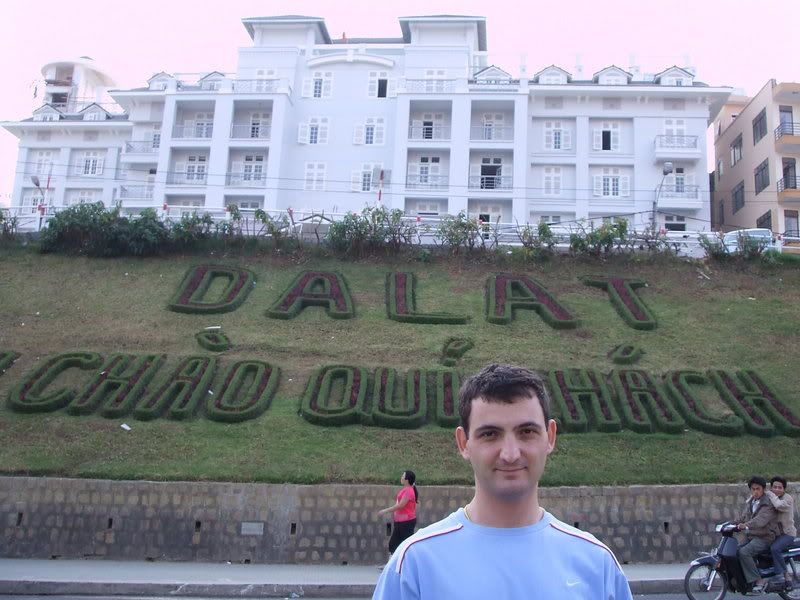
It took six hours to arrive at the hotel we reserved last week. Bus left us just in front of the hotel so we did not need to deal with the local taxis or motorbike drivers. The owner of the hotel (also the receptionist) was a very nice, very gentle, very helpful person. He was fluent in English and French. When I asked him where he learnt French this fluently, he said “in Dalat”. His wife was also speaking English/French and I saw his daugher playing the piano at the reception hall. This was a truely nice environment. Actually, it was a small hotel and run by a family of five (Mr. Duc, his wife, two young kids and a grandmother). When we enter the hotel lobby, he asked my nationality. I told him that I am from Turkey. Then he smiled and said “You are the first Turkish in our hotel”. “Well”, I said “I hope I will not be the last!” Then we went to our room. It was bigger than what we have expected. There were two beds and it did not take long to decide to lay on different beds while reading and using one of the beds for sleeping. The only problem with the room was the constant noise coming from the street just in front of the hotel. Because it was in the second floor, the noise from the motorbikes was very disturbing. When I asked to change the room, I learnt that the hotel was totally full. Then we did not have any chance but to go with what we have. The room had large windows and the first thing we see through the window was a mini-Eiffel Tower about 500 m. away from us. Then there was a red cathedral very near to the Eiffel tower. I looked at these two structures and with the help of relatively cold weather I have imagined that I am not in Vietnam but somewhere else. (I have no idea where it could be but I sensed that this was different from the rest of Vietnam.)

The weather was surprisingly cool and there was a nice breeze in the air. The lake was only 100 metre away from the hotel but because our room was in the second floor we did not have chance to see it from our balcony. There were roads going up and down. It seemed to me the town is busier during Tet because the population doubles and almost all hotels are full.

After unpacking our things, we went out for some walk and have some nice dinner if possible. In fact there were restaurants –most of them are simply called “café” but they serve meals as well- everywhere. We fist had a simple dinner in a café and went down to the Hon Xuan Huang Lake to walk around. There were people everywhere. Mostly families were strolling around, children were riding bicycles and big boys were driving motorbikes. It was all light, colors and noise. There were amusement parks for kids and young couples were on the grass –with their motorbikes of course- hugging and kissing each other. When I saw the lake I thought it could be a good idea to run around the lake in the mornings and I planned to wake up earlier next morning for a 5 km run.

While walking beside the lake, we bought grilled corn, felt the cold wind and smiled the little kids who were very enthusiastic about greeting a foreigner man. In that moment without considering how dangerous it was I was almost passing under a road sign. The board was high enough and I was not hitting my head even if I didn’t duck my head but still I had to stay away from the things which can bring us bad luck! Hopefully J pulled me to the side of the board and I got rid of an event which can cause enormous unfortunate things. When we got back to hotel, there was a surprise waiting for me.

15 Şubat 2007

Letters from Vietnam 64

15 February 2007

How much do we need the truth to live peacefully? Phra Farang does not mention this question directly in his book but somehow his approach towards Brahmanist-Animist rituals in Buddhism causes him to discuss this question. He sees the monks going to villagers’ houses to bless a newly-bought motorbike, a car or even a washing machine. He knows that these kinds of rituals are not part of Buddhism. Buddha himself denied all sorts of superstition. He struggles between the ontological truth and pragmatist truth. As I have discussed in my previous blog religions evolve same as living organisms do. Social practicalities joins to the content of religions very quickly and soon later it becomes impossible to differentiate the original teaching and the practical solutions of people.

In Thai Buddhism (or Theravada) there are so many practical solutions which make people’s faith stronger and by these solutions, people’s devotion becomes stiffer. Phra Farang’s solution to this contradiction is simple. He uses common Thai attitude and says “My Peln Rai”. Although the things done by Buddhist Monks are not the truth taught by Buddha himself, it makes people satisfied with their religion and for only this reason it can be excused. This solution can be considered as the victory of pragmatism. Or in the sense of utilitarianism, moral worth of an action is solely determined by its contribution to overall utility (from http://en.wikipedia.org/wiki/Utilitarianism) But pragmatic solution may be also dangerous for the keeping the religion in people’s hearts. Same pragmatism can also work in the way to keep people stay away from religion and stop them to seeking for truth.

As a person who has studied Math, Education and some philosophy at university, I have absolute respect for the ontological truth. By this term I mean the truth which does not depend on daily benefits of certain people and certain parts of community. It can be changed, improved, modified, denied or even abolished. That what makes relativism fits to reality. There is no truth which everybody can accept but there are truths which can be found common in almost all communities of the world. The scientific truth is actually what the future needs only. However the truth usually hurts because not everybody in the society can bear the burden of the truth. Most of the people are happy without the truth because what they believe and what they have learnt from their ancestors are good enough to make their life easier. The why do they need truth? What for? It only brings unnecessary arguments, fights and even blood. Because some people think that their truth must conquer the whole world, we had many wars in the past and still having similar wars in many parts of the world. For example it is not easy to accept that our lives –or lifetime of our souls- are finite and one day we will be nothing as we were nothing before our birth. People like to believe another life so that the injustices and miseries in this life will be balanced by a better life conditions. The only way to make people believe that there is no infinite life is strong science education. When people start to think with scientific reasoning and do not accept any knowledge without having a strong evidence people will be free of religious rituals. However it seems very difficult for today’s conditions. Because of this difficulty I agree with Phra Farang’s solution of “my peln rai”. It does not solve it but tolerates. So people are happy and monks have something to do. Although even monks don’t believe that a blessed airplane is likely to have a crash same as another airplane which has not been blessed, they do it to keep their statue quo and satisfy people’s needs to some extent.

Besides this book I would like to mention about yesterday. It was Valentine’s Day. I had an e-mail from a friend saying things about my ignorance on Valentine’s Day. I have to say that Valentine’s Day means nothing to me. It is neither part of my culture nor J's culture. I did not send any greetings to anyone yesterday because I do not celebrate Western inventions. It is more or less a commercial celebration. For me everyday is Valentine and I don’t need a special day to remember the people I care for. I even don't understand the reason why Thai people like to celebrate anything from West. Interestingly, in Thailand almost 10%of population is Muslim but I have never seen a Buddhist Thai celebrating any Muslim holidays. But they celebrate almost all Christian holidays. Then the people say "Thai people are easy going and celebrate anything" are making a mistake. Because like many other places in the world, Thai people also celebrate what the dominant power of the world imposes them to celebrate. Christmas, Valentine, Halloween etc... Western type of consumerism and cultural imperialism spread everywhere in the world and I don’t want to be part of it. I have never seen foreigners living in their own country celebrate Loy Krathong or Song Kran. Can you imagine young people in London or Amsterdam celebrate Loy Krathong? Why not? Because we celebrate not the one which are beautiful but the ones come from dominant culture. That is why I reject Valentine's Day and anything related to it. I do celebrate Muslim holidays because I am from Turkey. I also celebrate New Year because it is a new beginning. Other than these, nothing is special to me and I am just ok with answering the people with a smile who greet me. That is all…

Yesterday was very ordinary for us. We had dinner at home, read our books in silence, watched an interesting movie on TV (a strange and complicated love story) and did some evening walk around our apartment… Nothing was special, nothing was worth to mention…

Today is the last day at school. Then Tet starts. I will be in HCMC tomorrow playing tennis in the morning and spending my afternoon reading/writing. On Saturday, we will take the bus to Dalat. I also want to see how Tet celebrations go on Friday evening. If it is possible, I will post some pictures as well…

13 Şubat 2007

Letters from Vietnam 63

13 February 2007 – 06:41

I have been reading “Phra Farang, An English Monk in Thailand” for last two days. I must admit that I have been disappointed in a way of his approach to the religion or basically what he calls as ‘truth’. The writer, a former successful businessman became a monk in Thailand and this book simply reflects his experiences starting how he decided to be monk and goes through his ordination and other good/bad days in the temples. Although he mentions the reasons for choosing such a way in the first chapters, it is still not clear to me what his real motivation was. He says “I sometimes sensed that something was missing” and probably then he supposes us to believe that he became a monk to fill that missing gap in his soul. However this also claims that being a monk itself can help people to fill the gaps. I wish I could believe such a thing easily but the more I read, the more I became suspicious about the benefit of being a monk for both the person and the society. There is nothing wrong with the feeling of ‘something is missing’ because this is the dynamics of our life. We have this feeling so that we can keep going. The important issue here is how we can lead this ‘missing points’ to a place where we can use it as a pushing factor to help others. It is impossible to eradicate this feeling if you are a monk, even if you stop asking for new things, even if you don’t have a future to worry about. There is and there will always be something missing. The idea of incompleteness is one thing which helps us to keep going in the game and work for better. I think there is nothing wrong with the feeling of unsatisfaction in life as long as the individual does not try the evil methods to fulfill his/her wishes.

People have a misunderstanding that a monk sacrifices his life more than a layman does just because they choose the path of ascetic lifestyle. The way they choose includes a simple life which encourages them to stay away from seeking worldly pleasures. But what deserves respect if one wants to satisfy his needs by choosing a relatively difficult way? Isn’t it another way to make yourself happy? Why do laymen need to show respect and offer food to these people who just decided to stay away from stress of the modern lifestyle and became ascetic wanderers? I did not understand this!

Moreover the monks I knew when I was in Thailand and the monks mentioned in the book do not seem as they are really doing a great job. During my short term study in ABAC, I found two monks in my class were lazy in terms of doing their assignments and even reading the materials before coming to class. This of course means nothing and two monks can not represent the whole Shanga community. However my question is still the worth to be asked: Do monks sacrifice more things than laymen do to continue their lives? My answer is no because they work less than other people do. I respect all the good-hearted people, regardless of whether they are religious or non-religious.

I believe that there is no permanent self and there is no unique truth to embrace all the issues in the universe. It might be a great idea to let our ego melt in the big pot of ‘we’ or ‘they’ so that we will not have evil intentions to make bad things. This way while we deny our egocentric world, we can also build some fruitful relationships with our society. This will help the people to have a better life and will also help the individuals to get satisfied with the life they live.

I know very little about Buddhism. I used to consider it as a philosophical school rather than a religion but later the idea of Nirvana caused some changes in my mind. If we think that a doctrine offers salvation to its followers, then it might be considered as a religion. Buddhism offers a kind of salvation to the devotees. But now I am thinking about it again. The salvation offered by Buddha was nothing supernatural and nothing out of this universe. Basically the salvation offered by Buddhism is in the limits of reality and causality. From this perspective, it seems to me not a religion but a path to follow to stay away from sufferings of life. The bad thing is not everyone can be a monk. The good thing is even if you are not a monk; you can still enjoy beauty of Dharma.

In another page, the writer mentions today’s Buddhism as ‘corrupted’. I think the word ‘corrupt’ may not represent what actually happens with the religion during the long time frames. From the perspective of evolution, the religions also evolve. They somehow start to answer people’s needs even more than the founder’s imagination. The same thing is valid for other religions as well. For Islam, Bible and Torah are both Holy Scriptures but they are also ‘distorted’. For Sunni, Shia is wrong and for Shia, Sunni is wrong. Similar things happened in Christianity during the emergence of Protestantism. Religions evolve same as living organisms. They need to adapt to the society to survive. Otherwise, the religious doctrines also will need to migrate to other lands to be accepted. I would rather say ‘adapted’ or ‘evolved’ instead of saying ‘corrupted’. Because corruption happens to the things which are good in itself and corrupted thing is supposedly bad or wrong. But today’s Theravada Buddhism is good enough to answer people’s needs even though it is not exactly reflecting what Buddha taught 2500 years ago.

Beside his approach to Buddhist philosophy, the book itself an easy read and many parts are really enjoyable. Especially his experiences on the streets of Bangkok or in the temple of a small Isan village are remarkable and give a photographic picture of life in Thailand. I enjoyed the chapter in which he mentions about the funerals and the assaults to Thai monks by British youth in Liverpool, his feelings towards other animals etc… The book tells a lot about easy life style of Thai people and their common attitude towards problems by saying My Peln Rai.

While reading this book, sometimes I imagine myself as a monk. I might be called ‘Phra Ali’ by Thai people and I might enjoy the silence of the temple environment. Since most of the temples in Thailand are in remote areas, I can also a lot of time to write my experiences as an isolated monk. This might be a great experience but in fact one should not be a monk just to satisfy his adventurous intentions. I am not sure how much I can believe Buddha’s doctrines. I read them but there are always question marks in my mind about certain issues. Especially the way Buddhists see Dharma as ultimate truth keeps me discouraged from the whole thing.

“One day”, I keep saying to J in a jokingly tone, “you will call me Phra Ali and I will call you Yom Tuck”. She laughs…

12 Şubat 2007

Letters from Vietnam 62

12 February 2007 – 20:10

A few days ago I have received an alert from a well-known teacher recruitment site. It was a short message saying some bad things about my previous school. The message had only three paragraphs and it seemed to me as someone did not have enough with the school even after leaving long ago. As a teacher who worked in that school for three semesters I would not say that the things written were wrong. I can’t say them they are all true simply because I have no proof about the owner’s last diploma or the manager’s degree. In fact I would rather to write more than the amount written if I had the grudge to start such a thing at the beginning. First I wanted to add more but then I realized that keeping this kind of anger will only hurt me since the feeling inside me is the only real cause and possibly only real result of the whole process. I listened to the inner voice and did not post anything. It is also because if the reputation of the school is destroyed then so did mine! I have experienced very bad days in that school beside some nice days. When I started there, the boss was P. Then emerging power of M and A took over the authority from P and sacked P. Somehow I felt sympathy to P because he was the one who hired me and he was also very friendly person. Then D came as director. She did not like the way M and A were running the school and soon she arrived to school she has changed M’s role to a lower position. A has been fired –or forced to resign- together with his wife. But D has not been welcomed by most of the teachers because of her unprofessional standings on various issues. Then F the Perfect emerged to solve all the problems of the school. F paralyzed D’s dominance and became the new king. He was articulate and hard-working. His professionalism did not give any space to sympathy to other hard-working teachers or any possible mistakes. He was like a Big Brother watching everyone, judging everyone, shouting everyone and even blaming everyone. These kind of behavior I call Machiavellism but for him it was in the sense of One-Man-Show as well. If there is turmoil in an environment, whoever has the highest volume of voice, that person becomes the king. F had a great voice with the ability of talking long time without interruption –although repeating same things several times- and he had a good background in education. So he was the new king and has been hailed by almost everyone as F the Perfect. We forgot all the past and attached him as the great saver. But soon everyone realized that – may be others realized this long before so I should rather say “my mind has been convinced”- F could not be more than a puppet same as the ones before him.

All these things happened in one and a half year period. Behind all these power struggles, there were two people whom we can call the owners. The owners (or the O) thought that changing the director or the principal can solve the problems of the school and can make the school a paradise of learning. I believe they both have good intentions to make the school a better place to learn and a bigger place to make more money. It is quite normal as long as they know the order. In education, money comes long after the education shows itself as a distinguished and indispensable part of the institution. However the mentality behind all these changes soon showed that school’s destiny is determined by the policies which are designed for daily non-educational purposes or at least the short-term solutions.

It is almost impossible to forget the day F came to my door to say that O decided to fire new Math teacher. The reason was beyond belief. D offered him a salary which is exactly fitting his experience and his degree in the salary scale that has been approved by the O. But the O did not agree with D simply because the new teacher was an Indian. For O, the reasoning was simple: If an Indian teacher replaces an American teacher who surprisingly left the school without a real reason, even though Indian teacher does the same job, he should not be given the same salary. Why? Because he is Indian! I told F that this will hurt school’s image outside as well as the newly recruited teacher and something can be done to keep the new teacher in the school in the terms of his contract without hurting his feelings and dejecting school’s status in the community. F went to talk with O and later on I have learnt that she agreed to keep the promise once given by D. The Indian teacher worked in the school for two months and we talked a lot during that time. He kept complaining about the unreasonably harsh speeches of F towards him. The last day of his contract he came to my classroom. He said how the things ended: F came to my classroom and said “Today is your last day. You can leave the school at 3 pm”. That was all! No thanks for your help, no walking with him for a while, no saying a few nice words. The Indian teacher worked in that school as an inferior person and F did not even look at his face directly while he was talking to him. For F, he was a teacher who was probably having the salary which he does not deserve. Then I could understand why he was so difficult on him.

By the way the struggles school had for hiring an Indian teacher made me feel about my status in the school as well. My English was not better than his English and he also had many years of teaching experience. But O never raised an issue on my salary. I have received same salary as my native-speaker of English friends. I thought about it and of course it did not take long to find the answer. I was white! Although I had black hair and brown eyes, my skin was white. What a shame! I even told J that time that I had never imagined I would be feeling disgusted about my skin color. I was white then it did not cause any problem for Thai parents or O. I felt shy whenever I talk with my Indian friend without explaining him the difference between myself and him. For me there was no difference. But for O, the difference was remarkable and must be indicated in the salaries as a huge difference. If he is paid same salary as I am, then he must be treated very unwelcome so he would not want to work in the school after the expiry of his two months contract.

However, all this mess made me very suspicious about the school’s real educational objectives. Then other things emerged as well… I have worked at three different schools in Thailand before starting at this school but I have never been banned to leave the school campus during the lunch break. It was simply banned because O wanted all teachers to eat only in the school cafeteria. I am not sure her main purpose was whether to make more money from teachers or to discourage the boat-restaurant from making money by the teachers because of a past controversy between the school and the restaurant-owner. I remember my first school in Chiang Mai where lunch was served by the school and free of charge to teachers. The director of the school was aware of the fact that the food served in the school cafeteria may not satisfy all the teachers so he was happy to compensate 25 baht to the teachers who wanted to eat outside the school campus. The amount of the compensation might seem very little but still comparing with the situation in my previous school, there is a huge difference.

Then a student attacked to a teacher on the stairs. No real punishment given to the student and he returned to school after a week as if he did not do anything wrong. The teacher resigned after the incident –or at the end of the term-. Curriculum was always a problem when I was there. When I started there we were following North American curriculum. Then we started to use IGCSE curriculum. Later on we returned to American Curriculum again. I think curriculum is something very fundamental to a school’s identity and it can not be changed by new appointed administrators. Then a teacher who did tutoring in the school after regular school time could not get his payment because O deducted the money for using air-conditioner during the teaching.

There were good things as well. Nowhere can be perfectly terrible! For example I have never had problem with salary payments. I should even thank to O for paying my last summer salaries which I was not expecting after being called “stupid” three times by F for breaking my contract. Besides the salaries I also enjoyed the sports facilities and presence of helpful Thai staff. I enjoyed the teaching environment which is the most important thing for me in a school. Although some students were ultimately spoiled by their parents’ wealth, most of the students were respectful and willing to learn more. In a Math class, I felt the students’ bright achievement in the exams beside their respect towards me and the things I have taught them. That was one of the main things which kept me in the school. Since I am a teacher and I usually start my teaching with building a reciprocal trust and love, I enjoyed teaching at my previous school. What irritated me –probably many other leaving teachers- was the administration and the way the school was being run.

However I am still against writing such a comment on a well-recognized web site which is being watched by thousands of teachers around the world. It is because the things happened, happened in the past and has nothing to do with the future. Things might change and the school might be a better place in a short time by a few professional hands. These hands do not have to have degrees from reputable universities. If O has a middle-school degree, it does not mean anything as long as she wants to invest in education and expects the return in long term. As a person of education I don’t believe in degrees. There must be enthusiasm, there must be willing and there must be sacrifices.

Now I am working at a very good school. Everything is well-designed and everything goes with the rules. There is no conspiracies, no personal fights and no gossips. Even though F wrote a letter to my present school to say things about me, the school ignored them after observing my professional attitude towards my classes and my students. After two semesters, students like me and I like them. Everyday is another journey for me in terms of teaching and learning. I have been promoted twice in the same contract year and I have decided to carry on in the same school at least one more year. Here an Indian, a Thai, a Filipino, a Turkish, a Canadian, an English are all paid equally and treated equally according to their education and experiences. Not according to their skin colors. For me, remembering the old days in my previous school is like walking in a blurred picture of a path covered by thorns and flowers. I had students as nice as flowers but I also had days as painful as a thorn can cause. I remember the day I could not keep my tears after realizing that students hid my keys after a long exhausting working afternoon. I remember the day O announced that all Filipino teachers (or coaches) must stay in school one hour more than other teachers do -30 minutes early in the morning and 30 minutes in the afternoon- without considering their contracts or even without asking them. I remember the day F came and exploded to my face just because I missed the morning flag ceremony. I remember the day F called me stupid. I remember the day I worked on the never-ending school’s schedule at the hospital, beside my wife who was still sleeping after the surgery. I remember the day I mentioned this thing to F and his saying “I don’t care what you have done in the past”. I remember the day I cried all evening at home and convinced myself not to go to school next day but in the morning still drove my car to the school just because I did not want my students stay behind the schedule of my syllabus. It is all past and we are all living in present. I have only one thing to say now. I hope with the great efforts of good teachers and administrators, my previous school can also be a good place for learning. As S said in her last e-mail, things are getting better and the school is becoming a better place. Then I can only wish them good luck in their journey. May be I was not passionate enough or brave enough to keep going there. May be I was more career-oriented than many other good teachers. I hope –really hope- that my previous school will be a good school in terms of education.

I wrote this blog for only one reason. I wanted people who are reading my blog to know what happened in my previous year and how happy I am in my present school. All these opinions are based on my experiences during my one and a half year working in my previous school. I don’t think I have lied at any point or said something happened which actually did not happen. Then whoever has respect to the truth can either write to me directly or post a comment under the page. I promise I will not delete any comment posted here.

10 Şubat 2007

Letters from Vietnam 61

10 February 2007 – 12:44

One week passed and basically I did nothing! Is it because of bad time management? Or is it because of the desire for some sort of relaxing moments? Whatever it was, I already wasted one week for nothing. I have learnt that I have been appointed to a new position at my present job. Besides teaching, I will also coordinate other lecturers, try to help the improvement of the exams and syllabus and have a stronger contact with Melbourne to make sure the parallelism between two campuses. For me it is not a hard job because I have been doing similar things for almost last seven years. It is usually part of a teacher’s life and I enjoy playing with mathematical concepts. Eventually, Statistics is the art of turning everything in the life into numbers and later turning numbers to words again to make sense for number illiterate people.

When I said I have wasted my whole week I meant it in terms of writing. I did not write anything for the whole week except for a paragraph. Somehow it did not come out. Although I have finished the story in my mind, I can not keep my attention on writing. It might be because of this new position. I am really not sure what I am supposed to do during the times I am not teaching and how to approach this kind of management position. It is at the end some kind of leadership and needs continuous attention. When I sit in front of the computer at school after 5 pm, my mind used to keep itself isolated from school’s business easily. But this week it seemed the job will never end and I will never be able to say “This is the end of today.” I think this happens to all people who start a management-type job first time in their careers. There is always something to do, something to sort out, something to deal with, something to rearrange, something to complain, something to modify, something to improve. Then it becomes a vicious cycle and one never ends worrying about the things to be done and their consequences.

Other than writing, I have finished a nice book this week. The Bookseller of Kabul, written by Norwegian journalist Asne Seierstad is a modern, realistic picture of war-torn Afghanistan. She did not try to decorate her stories with unnecessary details or stupid praises to irrational cultural differences. Her writing reminds me professional photographer’s job. As a photographer takes what he/she sees, the writer also does the similar thing without adding much to the picture. The harsh condition of life in the dusty streets of Kabul, the miserable conditions of women and children, the God-like power of a rich father, the forbidden love stories, the girls who never know what it is to be alone and to love someone, the idle boys who can be cruel when someone says something wrong about Islam but also go out with friends to drink whisky or to smoke hashish are all living together in a desperate life and with a hope of old glorious modern days of Afghanistan. I wrote a few paragraphs from the book in my notebook and I would like to write them here as well.

Without the blood, it would have been Shakila, not the piece of cloth that was returned to the family. (page 108)

Alone is unknown idea for Leila. She has never, ever, anywhere, at anytime been alone. She has never been alone in her apartment, never gone anywhere alone and never remained anywhere alone, never slept alone. Every night she sleeps on the mat beside her mother. She quite simply does not know what it is to be alone, nor does she miss it. The only thing she wishes for is a bit more peace and not so much to do. (Page 169)


There were many more nice parts in the story but it is impossible to quote all of them here. I am going to start another memorial book this week. It is called “Phra Farang” written by Phra Peter Pannapadipo. He is an English monk living in Thailand. Actually he is not a monk any more because he needed to quit the monastery life to be more helpful to the society. He is now running a foundation for poor children’s education. What a wise decision! I would like to visit him when I go to Thailand next time and offer some help if it is possible. At the end I believe in education only. If a society wants to survive, there is only one way to keep it on the track. It is education. Anything else like religion, identity, economy etc… comes after education. Once the education can stand on its own feet, then the other institutions can slowly get better.

Before finishing today’s blog, let me write a little bit about my new bike. I bought a new motorbike with a cost of 300USD only. It is very old and relatively big. Since it has clutch and does not have a basket in the front, it is not so popular in Vietnam. However, it goes without problem. Actually, yesterday we had a little problem with the electric start but the mechanic solved the problem in 5 minutes. He even did not ask money for his help which made me surprised a lot. May be I need to look at Vietnamese society closer. Since I have been here, I always looked the bad sides of the society like traffic, gambling, prostitution, censor etc. But here the generosity offered by a little mechanic guy to an unknown Western-looking person was a blow to my head. I decided to start a Vietnamese language course as soon as possible and try to have more Vietnamese friends. This might help me to look at society from a closer perspective and see the beauties which are hidden behind the thick curtains of traditions and conservative lifestyles.


16 Ocak 2007

Letters from Vietnam 59

16 January 2007

For my dear friend, I.Y.

I too, breaking out of old ways, had discovered solitude and the melancholy which is at the basis of religion. Religion turns that melancholy into uplifting fear and hope. But I had rejected the ways and comforts of religion; I couldn’t turn to them again, just like that. That melancholy about the world remained something I had to put up with my own. At some times it was sharp; at some times it wasn’t there.

V.S. Naipaul, A Bend in the River, p.125

I have received a strange letter from a friend two days ago. I hope that this blog entry will find my dear friend.

I.Y. is one of my long-time friends since the beginning of university years. We have spent almost five years together in the school. While he left the community for a partial freedom with a few friends in the university, I was still a faithful devotee. Then I graduated ad moved to Thailand. He stayed in the school one more year. After he finished the university, he did his master’s degree in Istanbul. Then he went to Florida for PhD with his wife. In the last seven years I have been away from Turkey, we met twice in Istanbul. As old friends meet and talk, we did the same thing. He came to my brother’s house to visit in 2003. As I remembered it was a cheerful and happy chat. We have sent a few e-mails to each other in these seven years period. Mostly on important days like bayrams or new years…

I called his letter strange because of its content. His style is always the same. His words remind me voice of a desperate man who believes in paradoxes of life and his disbelief in solution is reflected indefinitely on the surfaces of mirrors of his words… His style, as a man of letters, did not change in the last seven years. In his letters, there is always sound of a man who looks for the truth and at the end blames the roads or guides for the failures. Some nostalgia –which I always like to read- and some pieces from the old days’ happy moments fill the beginnings of most of his letters. He always reminds me Kafka for his belief in inconsistencies. The difference between Kafka and him is clear. Kafka has been tortured by external forces and he uses these tortures to create his art. However I.Y. tortures himself with the belief in unhappiness. He seems like a naughty boy lost in the woods. Even though he has been shown the exit, he still insists that it could not be exit. There exists a kind of self-exile in his own world, a kind of desperate mood which does not want to end either because he likes it or because he does not know how to get out. He might need to know that he too deserves to be happy and it is not difficult at all… We don’t have to understand or know anything to be happy. In fact the more we know, the more we might demand and it might cost more trouble.

The content of his letter was strange because it was beyond my expectation. He asks me to return to God and His prophet. I was bewildered! He is the one who studies PhD in Chemistry and he is the one working on scientific experiments for last 10+ years. I even thought that the letter was written by someone else, not by my dear friend I.Y. However, it was written by him and he really asks me to resume to my old days. He is in a kind of psychological trauma or an emotional breakdown. What was he thinking? Going to Florida and having a PhD will make him the happiest man in the world? Or he will be satisfied with knowledge, with science or with other worldly pleasures? It took some time for me to understand his letter. I wrote him a short answer but my letter did not satisfy myself in terms of content. I love this man and I have to help him instead of accepting his offer to help me. I am not the one who is in need of help! I also mentioned this thing in my letter. I expect nothing in this life other than being a good man. I only want to make people around me happy with my presence and leave something worthy behind. I don’t need to believe in the beauties of heaven to be a good person or I don’t need to be scared with the tortures of hell to stay away from evil actions. Why is it so difficult for the believers that nonbelievers can be happy as much as the believers can? And why is so difficult for the believers that a pleasure can still be pleasure even though it is not infinite. Eating might be pleasurable and it is finite. Same as my own life, same as other pleasures! You do it, you enjoy it and you lose it. It is the cycle of life. What is wrong with the people is the belief in infinity. When people believe in infinity, then it becomes harder to make people relish with what they do. As Dawkins mentions in his latest book, why can’t we appreciate the garden without thinking that the garden is not infinite and without considering the gardener?

Another thing I have mentioned in my letter was about the peace of mind. Believers think that nonbelievers are always in the mood of hopelessness. We can not be happy because we do not believe in what they believe. Nonbelievers do not deserve to be happy because they believe in nothingness. Well, to be honest, I am quite happy with being nothing after death. I was nothing and I will be nothing. And I am brave enough to embrace this fact. Those who believe can not accept this fact because it hurts their selfish infinity theories. They want to exist forever. They don’t want to lose their mind and this ambition makes them believe more in what they are told. I think, the world was here before me and it will be continue to exist after me too. I don’t know how long more but people live on this earth without me. What will be left here are our names, our children, our deeds. And this is enough to be satisfied with the life. The more a person believes in infinity, the more he/she becomes its slave. Borges mentions in one of his short essay: There is one concept which troubles and destroys all others. I am not talking about evil, I am talking about infinity.

I don’t want to mention the inconsistencies in the beliefs or other logical/philosophical dilemmas in religions. It is another problem. What I want everyone knows is quite simple. It is very possible to live happily without believing in an omni-potent, omni-scient God and it is also very possible to be a good person without God. There are people who are bad even though they believe in God as many as there are bad people who denied the existence of God. The opposite is true as well. There are good people in both sides. Happiness or peace of mind depends on the expectations in this life. If you expect to find the truth via science or philosophy, you will never be satisfied. However, life is a journey and we live to seek for the truth, not to find it. Life has a meaning since we always feel that we are on the road and getting closer to the truth. The more we dig, the more we will clarify the pieces of jig-saw puzzle. Can we finish the puzzle? As Escher’s “Paint Gallery’ picture shows a signature of the artist at the middle of the square, the truth can never be completed. It is not because we are not able to complete it. It is because we are still at the beginning of the journey. And the more we will learn about ourselves, the realm of unknown will also get bigger. We will never get to the point where we can say this is the end. This is the dynamic which also makes our life goes on. Those who believe that they know the truth and they try to spread it to the others are the ones who are hurting people instead of helping them. Believing that my truth is the truth is a deadly disease. To believe that everyone must believe in my truth is deadlier… Here we can remember the famous words of Kahlil Gibran: Do not say I found the truth, rather say I found a truth.

Believing in an infinite life with other motivating ideas would be nice but I am afraid it will make me lazy. Because religion explains the things simply, once we believe, then there is no need to worry about anything. Everything can be explained by the will of God. Then why should I bother to seek for the truth? Why should I try to understand the book of nature? A religious person can answer this question with a nice twist: We study nature to understand our Lord better. However, what happens is whenever the scientific research shows a truth which contradicts with the God’s words, then science is being sacrificed for the sake of scripture. Isn’t evolution a good example for this?

I hope this blog entry will find my dear friend… I am thankful to his thoughtful care but still it does not change my mind. I left religious dogmas long ago and happened to believe in myself. I am happy with what I have and what I do in this life. I hope he also will find his truth as soon as possible and will leave life of no-solution. Whatever the truth he wants to believe, I respect his choice. As long as he is happy with what he believes and he is respectful to what I believe, he will be my dear friend, same as in the old days of Bogazici University, walking uphill from his house to the school, our arms are tied to each other, singing some old songs while shivering in the cold wind coming from the sea… Same as the days I prepared breakfast for him and his engineer friend and had trouble to wake them up, same as the days we met in the study room and talked about our love stories like my never-starting T-distribution or his enduring lovers, same as the day I have seen him first time carrying an umbrella for a girl and felt happy for him…

08 Ocak 2007

Letters from Vietnam 56

7 January 2007 – 10:14

After finishing Richard Dawkins’ last book, “The God Delusion” I wanted to write a review on it. However, the book is too large and it covers so many topics. So I have decided to write about only the parts I like or basically I can not disagree (partly or entirely)

In the page 54, Dawkins starts a subchapter titled NOMA. He uses the acronym NOMA for the phrase “Non-overlapping magisteria”. The original acronym comes from Stephen Jay Gould’s book “Rock of Ages”. In this book, the writer claims that religion and science answer different types of questions and their domains do not overlap. Then the conclusion is there should not be a conflict. Here is the paragraph from Gould’s book. I had a little smile on my face when I read the last line of the following paragraph:

The net, or magisterium, of science covers the empirical realm: what is the universe made of (fact) and why does it work this way (theory). The magisterium of religion extends over questions of ultimate meaning and moral values. These two magisteria do not overlap, nor do they encompass all inquiry (consider, for example, the magisterium of art and the meaning of beauty). To cite the old clichés, science gets the age of rocks, and religion the rock of ages; science studies how the heavens go, religion how to go to heaven. (Page 55, Dawkins R., The God Delusion, 2006, Bantam Press)

Dawkins clearly denies this distinction between religion and science. Firstly, he believes that everything can be explained by science and if there are things which can not be explained by science, it must be because either question is asked wrong or science is not capable enough to answer them yet but sure it will be in the future. He also denies the positions of theologians in the modern society. He asks in the page 56 as an answer to Marteen Rees’ words of there is a space for philosophy and religion beyond science: What expertise can theologians bring to deep cosmological questions that scientists can not?

I guess Dawkins here makes a clear distinction for the type of the question which is supposed to be answered by the theologians. Nobody will ask a theologian questions regarding cosmology or cosmogony. They really answer the questions where science –and not other systematic body of knowledge- can not reach. The reason for this is the difference between the natures of religious knowledge (if we can call it knowledge) and scientific knowledge. “People are credulous animals and they find something stupid to believe if there is no good one to fill the gap” says Russell. Scientific knowledge covers empirical world and for scientist/scientifically thinking people, this is the only type of knowledge beside Mathematical knowledge (I believe even Mathematical knowledge comes from experiment) Then what is religious knowledge? It is not systematic, not based on scientific accuracy, and has many contradictions –even though religious people always find reasons to get around these contradictions-. Here is an example for these contradictions and biblical solution: Before the scientist discovered that earth is around 5 billion years old, people used to believe that all history was 6-7 thousand years, starting with Adam and Eve. Whenever scientist found enough evidence to show that earth is much older than what people thought, religious people first rejected those proofs. Then when the proofs became undeniable, they turned to their bible and tried some ad hoc hypotheses on the principles of bible. They said “the bible is written in a metaphorical language and we should not understand it literally”. Nobody asked them why God needed to send us a poetry book to guide our life. Wouldn’t it be easier just to write the rules of the life as well-defined principles (like in definitions in law or in Mathematics)? Can you imagine a computer guide which is written in a metaphoric language? I think half of the people who buy the computer would return the computer for the problems they have caused because they understand the guide literally!

At the beginning of 20th century, logical positivism prevailed to almost all Anglo-Saxon philosophical schools. Russell, Wittgenstein, Ayer and many more philosophers, mathematicians, physicists joined them because their claim was fitting with the needs of the age. They had one main theory under all structure: A proposition must be verifiable to have a meaning. If I say ‘there is a book on the table’, this proposition can have a meaning if and only if it can be verified by right methodology. By this way, philosophers achieved to discard the questions like “Does God exist?” or “Is there life after death?”. Basically, these questions were not true questions because the possible answers were not scientifically verifiable. I think this development can be thought as a base for NOMA. There are questions which can be answered by scientific experiments and these questions belong to the realm of the real world. There are also questions which can not be answered by scientific experiments, will never be answered by scientists. These questions could be either ignored or attributed to the religion. Dawkins think that these questions are beyond science but not because they can be answered by any other means. If science can not answer, then who can answer? The holy book which was written 2000 years ago? I agree with him in the sense of ‘why we need religious knowledge to answer the questions which can not be answered by science’ but if science is not able to answer, then don’t we have to make people believe in science and the future of the science so that one day science will solve all the mysteries including the existence of God.

I believe there will be always people who believe in a God (or similar supernatural entities) on this earth no matter how advanced science we will have. As I quoted from Russell, man is a credulous animal and needs to believe something. Saint Augustine says “Once we believe there is an omni-potent God, then no contradiction remains in the universe”. It is absolutely true if we also accept that our logic is controlled by the same omni-scient God. Then whenever we can find a contradiction, we can either attribute it to omni-potent God’s wish or our uncontrollable logical inferences. In this sense I agree with NOMA but I also believe that people should be taught to ignore religious dogmas to advance. There are questions which can not be answered by the science but we can not say that these questions can be answered by religion just because there is no answer yet. At the end, religion is not an alternative for science, it does not fill any gap which is left by the science and it does not deserve any respect as knowledge. If we can not answer the question on the existence of God, we can just ignore it. This way we do not have to deal with religious dogmas/explanations on the issues regarding ethics, daily life and the value of science. The questions which are not answerable by science will remain the same because as I gave an example on ad hoc hypotheses for the text in the bible, people who believe in God will definitely find a new way to get around and skip the claims of scientists.

What we have to do is obvious and Dawkins talks about the solution in different parts of the book. We have to educate young people/children in a way that they will believe only what they can find by their own reasoning. They will think with their own heads and they will only be guided by scientific knowledge in the difficult days of life. They will not be cheated by the attractive heaven scenes because they will never have enough evidence to believe that there is a heaven. Education is the main tool to achieve this aim. The students must learn only empirical knowledge as “knowledge” and beyond the limits of proof there is no place for any other belief.

If we can have a world which does not have religion, then I believe there will be less exploitation, less lies, less tears and fewer wars in the world. At least, I have not seen a man kills a man in the name of science but the world is full of murderers in the name of the God they believe. They fight because they believe in different Gods/religions. That is why the wars never end because none of the fighters can prove that their God is right.

Beside this, religious people can ask that if there is no God, how we can possibly set the moral values. This can be seen through Dostoyevsky’s novel character in Karamazov Brothers. “If there is no God, everything is permitted” says one of the characters in the novel. This might reflect the mental confusion of Dostoyevsky. So if we deny God’s rules, we will be in chaos indefinitely and kill each other until finally humankind is extinct on the earth. Not necessarily! We can live in peace without the Ten Commandments from the Old Testament or any other holy scripture of any religion. They worry about the moral values because they can not think of an ethical system which is independent from religion. But it is quite possible to have an ethical code which can also answer modern life’s problems such as genetic cloning, stem cell research, monitoring the unborn babies during pregnancies to avoid future problems, homosexuality, abortion etc… There are millions of people in this world who do not believe in God and live peacefully. They do not believe in moral codes inherited from the ancestors but they use their reasoning to shape their life. Here is an example which is also mentioned in Dawkins’ book: http://www.ebonmusings.org/atheism/new10c It may not be perfect but it can be a good beginning for a future reference.

Religion creates an easy base for the people who are in need of urgent help. But still this does not make religion true. I have read “Hastalar Risalesi” (Booklet for Patients) written by Said Nursi when I was students at the university. The main question in this booklet was how we can make a patient happy if he/she does not believe in God and Heaven! If the answer is ‘Yes, a patient must believe in a super-natural power to be strong before his/her death” and if we use this as a proof for existence of God, we are making a big logical mistake. Believing in belief and believing in God are not the same things. It might work and the patient can be happy in his/her last days. He/She might enjoy the company of friends praying for him/her beside the bed. However this happiness does not guarantee that his/her friends are right in their belief and he/she will go to heaven after death. It is all believing in the power of belief. It would not be different if the patient believes in Brahma, Allah, God or Buddha!

Unlike religion, scientific knowledge based on the principles of “change” and “leaving the old one behind”. If a new idea prevails the old one, scientists change it after long term careful investigations. Nobody can say that it is easy to leave a theory behind in favour of another one. However, science is ready for the change if it is necessary. It needs patience, hard-work and ambition. If you look at the life stories of great scientists, you can see how their enthusiasm for the knowledge can lead them to the positions they achieved to hold at the end of their lives.

I would like to finish today’s blog with a nice quote from Einstein.

I am a deeply religious nonbeliever. This is a somewhat new kind of religion. I have never imputed to Nature a purpose or a goal, or anything that could be understood as anthropomorphic. What I see in the nature is a magnificent structure that we can comprehend only very imperfectly, and must fill a thinking person with a feeling of humility. This is a genuinely religious feeling that has nothing to do with mysticism. The idea of personal God is quite alien to me and seems so naïve.

(Page 15, Dawkins R., The God Delusion, 2006, Bantam Press)